Why the Walk to the Ground Becomes Part of Matchday
Why the walk to the ground becomes part of matchday: recognise the small snags that spoil its rhythm and make the journey feel shared again.
Why does the walk to the ground feel different from an ordinary journey, and why can it lose that feeling? The walk to the ground becomes part of matchday through anticipation, familiar landmarks and the gradual change from everyday streets to sporting space. When the ritual feels awkward, the cause is often a practical snag: a rushed departure, a disrupted route or a group moving at different speeds.
Treat the walk not as empty time before the event but as a transition with its own rhythm. You do not need to make it elaborate. Notice what is interrupting that rhythm, then try a small adjustment that lets the journey belong to the day without turning it into another task to manage.
What makes a familiar route feel like matchday?
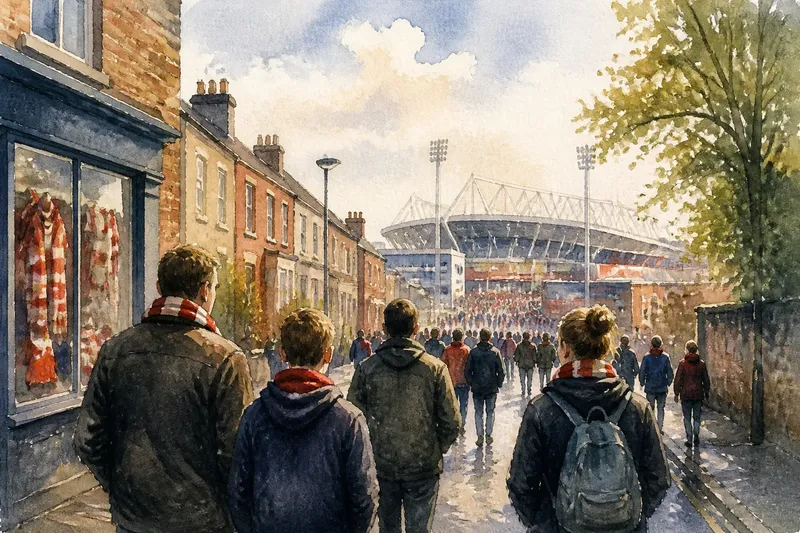
A repeated route gathers meaning from details that ordinary travel tends to ignore: the corner where supporters begin appearing, the shop with scarves in the window, the sound that carries from the ground, or the point where traffic gives way to a stream of people on foot. Any one detail may be unremarkable. Together they make the approach recognisable.
That recognition helps shift attention. The day may begin with errands, messages and the usual concerns; on the way, familiar signs draw the mind towards the game. The transition does not happen at one precise boundary. It builds as the surroundings and the people travelling through them begin to feel connected to the fixture.
The route can also become shared without requiring a formal plan. A nod to another supporter, a short exchange about the team or simply walking alongside a familiar crowd can turn private anticipation into a public ritual. The feeling comes from repetition and participation, not from following a prescribed set of gestures.
Why does the walk feel rushed before kick-off?
The usual cause is treating the walk as the final item on a tight timetable. A late departure leaves no room for a slow crossing, a blocked pavement or a companion who needs to pause. Instead of noticing the familiar approach, everyone starts calculating whether they will arrive in time.
Try choosing a departure point that gives the walk a little breathing room, without making arrival itself the main event. If you are meeting someone, agree on a clear place to join rather than relying on a string of messages while moving. Keep the route simple enough to follow and leave optional detours out of the plan.
Say you usually leave after finishing a household chore and end up hurrying through the same high street. Imagine moving that chore earlier and agreeing to meet a friend beside the station entrance. The expected result is observable: you can walk at a more even pace, notice the supporters gathering, and arrive without the conversation being dominated by the clock.
More time is not always better. A long wait outside a closed gate can drain the energy the walk was meant to build. Aim for a calm approach, not an early-arrival contest.
What if the usual route is blocked or unfamiliar?
Construction, crowd controls, a closed crossing or a change to public transport can break the sequence of landmarks you rely on. The frustration often comes from expecting the route to work as it always has, then trying to improvise while the crowd moves around you.
Before leaving, check a current local map or travel notice if you have reason to expect disruption. Identify one straightforward alternative and a recognisable place where your group can regroup if separated. On the day, follow official signs and steward directions rather than trying to recover the old route through a restricted area.
If you are new to the approach, keep the first journey uncomplicated. Use a public transport stop, main road or clearly named meeting point as your anchor, then let the crowd and signs guide the final stretch. The point is not to collect landmarks for their own sake; it is to keep the walk legible enough for attention to turn back to the occasion.
Where access arrangements, transport guidance or local restrictions affect the route, follow the relevant operator’s instructions and local rules. Do not treat an old matchday habit as permission to use a closed path or cross where it is unsafe.
Why does the walk feel less shared when everyone is on a phone?
Phones are useful for checking a meeting point or a sudden service change, but constant route updates can make companions feel like separate travellers. Each person watches a screen, adjusts pace alone and misses the small exchanges that help the walk become communal.
Try agreeing on the essential information before setting off: where you are meeting, which broad route you will take and what to do if someone is delayed. Then keep the phone available for a real change rather than using it to narrate every turn. If the group needs navigation, nominate one person to check it and share the next decision aloud.
Do not force conversation. A shared walk can include quiet stretches, and supporters arriving from different places may have different energy levels. What matters is allowing people to travel together without making every silence or pause feel like a problem to solve.
How can different walking speeds disrupt the ritual?
A group may include someone who walks quickly, someone carrying a bag, a child who stops to look around, or a companion who needs regular rests. If the fastest person sets the pace by default, the rest of the group can experience the route as a chase rather than an approach to the game.
Agree on a pace and a simple regrouping point before the crowd thickens. Choose a broad, visible place where people can wait without blocking a doorway or pavement. If someone needs to take a different route or travel separately, settle that calmly rather than making the decision in the middle of a crowded crossing.
Accessibility needs should shape the route, not be treated as an inconvenience to work around at the last moment. Check available access information and choose a path that suits the people travelling, including its surfaces, crossings and places to pause. For individual access questions, ask the venue or transport provider about current arrangements.
What should you do when the landmarks stop feeling familiar?
A route can change gradually. A shop closes, a wall is repainted, a familiar meeting point becomes crowded, or a new development alters the view. If the ritual depends on one landmark staying exactly the same, its disappearance can make the whole approach seem less like matchday.
Rather than trying to preserve every old detail, notice what has taken its place. A different corner, a new stretch where supporters begin to gather or the sound of activity ahead can become part of the route in its own right. Give the replacement a few visits before deciding whether the walk has lost its character.
It is not worth the effort to turn every fixture into a hunt for the perfect viewpoint, the ideal photo or a carefully timed sequence of stops. Those additions can distract from the unplanned signs that make a route feel alive. Keep the details that help you arrive together and let the rest remain ordinary.
What do supporters ask about the walk to the ground?
Should I walk the same route every time?
A familiar route can make the transition into matchday easier, but there is no need to preserve it when conditions change. Keep the parts that feel useful and choose another clear, appropriate route when a closure, access need or travel disruption calls for it.
How can I make the walk feel less rushed?
Settle the meeting point and basic travel plan before leaving, then avoid filling the journey with optional stops. A steady pace and a clear place to regroup are more useful than trying to make the walk follow a perfect schedule.
What if I am walking to the ground alone?
The ritual does not depend on travelling in a group. Familiar streets, the growing presence of supporters and the approach to the venue can still mark a shift in attention; follow current signs and choose a route that feels appropriate for your circumstances.
How do I include a companion who needs a slower pace?
Ask what pace and route work for them before setting off, then agree where to pause or regroup. Planning around that need from the start makes it easier for everyone to share the walk rather than leaving one person to catch up.
How can you keep the journey part of the day?
Start with the snag you actually encounter. If the walk feels hurried, change the departure plan; if it feels disconnected, agree on a meeting point and leave room for conversation; if the route has changed, choose a clear alternative and accept that new landmarks may take over. These adjustments are small enough to make without inventing a new matchday routine.
Why the walk to the ground becomes part of matchday is ultimately a question of attention as much as distance. A repeated journey gathers meaning when familiar surroundings, fellow supporters and the approaching sporting space begin to register as parts of one occasion. You do not need to manufacture that feeling; give the walk enough ease for its real details to come into view.