How the Matchday Programme Grew Beyond the Match Report
Matchday programme history shows how clubs used printed pages to explain a fixture, share a voice and give supporters a common language for the game.
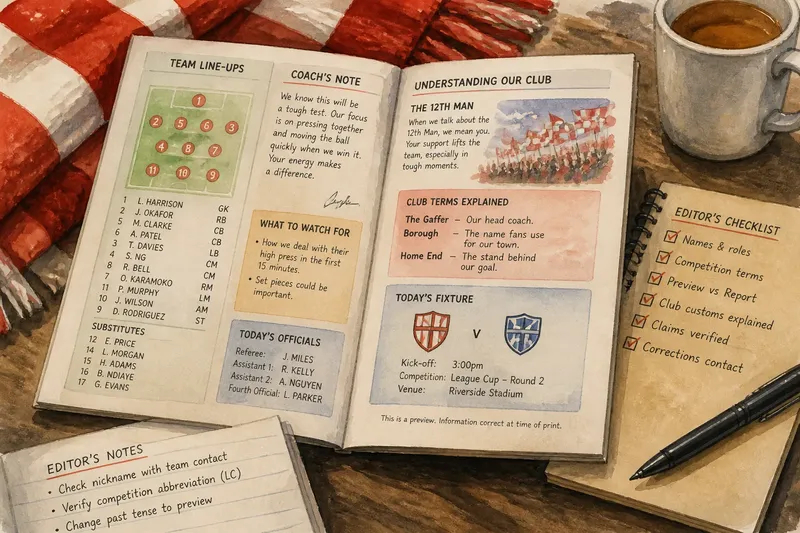
Matchday programme history is not simply a story of match reports growing longer. A supporter opening a programme before kick-off encounters a club speaking in print: explaining its choices, addressing its audience and giving the day’s rituals a shared vocabulary.
What did a match report leave unexplained?
A report describes play after it has happened. A programme prepared for the crowd faces a different task: it can explain the occasion before the first whistle, when supporters are still working out what to watch and how the club wants the match understood.
That distinction is about editorial purpose, not a universal historical sequence. Programmes have differed between clubs, sports and periods, so claims about what came first need support from particular surviving editions. The useful point for a reader is simpler: a preview, team list or short note can orient people before there is a result to report.
How does a programme give supporters a shared vocabulary?
Names, competition terms and club customs help spectators talk about the same contest. A newcomer may recognise a player’s name from the team list; a regular may notice a familiar phrase in a note from the club. These printed cues give the crowd common reference points without requiring everyone to have the same level of knowledge.
The wording matters. A clear explanation of a competition or selection decision can bring a reader into the conversation, while unexplained shorthand may leave them outside it. Editors can keep a club’s distinctive voice and still define specialist terms the first time they appear.
Say a visitor arrives knowing the home team’s name but not its squad. The programme lists players by shirt number and includes a short, accurate note explaining one selection choice; the visitor can then connect a name to a player and follow that discussion with other spectators. The expected result is easier conversation, not instant expertise.
What language belongs in a club’s programme?
Useful writing answers a question the crowd might actually have. A coach’s note can explain the approach to the fixture; a piece about a club custom can tell a newcomer why supporters respond in a particular way; a brief profile can introduce a person who might otherwise remain a name on a list.
Each item should be tied to this club or this occasion. Generic praise and repeated slogans take up space without helping a reader understand the game. It is not worth the effort to add a long block of decorative copy merely to make an issue feel substantial.
How can editors make the writing welcoming?
Use plain language for practical information and explain club-specific terms where they first appear. Keep the distinction between preview and report clear: before the match, describe what is known and what supporters may watch for; afterwards, describe what happened.
Check names and roles with the people responsible for the team, and ask permission before publishing personal details that are not needed to explain the fixture. A correction is easier to make before printing than to explain after a reader spots an error.
What do readers ask about programme language?
Why include a note from a coach?
A brief note can clarify the team’s plans or the context of the fixture. It works best when it offers specific information rather than repeating a general message of support.
Should a programme explain club slang?
Yes, when the term matters to understanding a chant, custom or piece of club history. A short explanation welcomes newcomers while leaving the original wording intact.
How can an editor avoid sounding promotional?
Use concrete details and distinguish opinion from fact. If a piece makes a claim about a past event or a person’s role, check it with a reliable club record or the person concerned before publication.
What should happen when a detail is uncertain?
Leave it out, qualify it clearly or verify it before the programme goes to print. A confident guess can mislead readers and make later corrections harder.
What should a reader check in the programme’s language?
Use these checks to decide whether the wording helps you understand the occasion or leaves important context unclear:
- Specialist terms: If a competition or tactical term is explained on first use, then keep reading with the meaning in mind; if it is not, then ask the club or check an authoritative competition source rather than assume.
- Names and roles: If each person’s name and role are clear, then use the list to follow the match; if a name or role conflicts with what the club confirms, then flag it to the editor before relying on it.
- Preview or report: If the piece is dated or worded as a preview, then treat its claims as expectations; if it describes completed play, then check that it was written after the match.
- Club customs: If a custom is explained with enough context to understand its meaning, then use that note to join in; if the wording is unclear, then ask a regular supporter rather than imitate a response you do not understand.
- Claims about people: If a personal detail is relevant and attributed, then read it as the writer’s account; if it is sensitive or unsupported, then ask the club for clarification and avoid repeating it as fact.
- Corrections: If an issue names a correction contact or channel, then send a specific note with the page and wording; if it offers none, then use the club’s official contact route and state what should be checked.
How can a club keep its voice consistent?
Set a small editorial routine: agree who checks names, who verifies fixture information and who reads each piece for clarity. Keep a short list of club terms and their preferred explanations, so different contributors do not describe the same custom in conflicting ways.
Imagine a volunteer editor has a draft containing an unfamiliar abbreviation, an unconfirmed player nickname and a preview written as if the match has already happened. The editor checks the abbreviation with the competition’s official material, asks the team contact whether the nickname is appropriate, and changes the tense to describe the fixture as upcoming. The resulting copy gives readers a clear term, avoids publishing an unverified personal detail and no longer implies that the result is known.
Matchday programme history is best approached through the language and purposes visible in particular editions, rather than an unsupported story of one inevitable evolution. For a reader, the practical test is whether the words help people understand the fixture, recognise the club’s voice and take part in the conversation around the game.