Printed Programme or Pocket Keepsake Box?
A printed programme or pocket keepsake box preserves a season in different ways: choose a ready-made chronology or a personal record that welcomes oddments.
Should you keep a printed programme or make a pocket keepsake box? A printed programme gives a season its own chronology; a box lets you gather the small, mismatched objects that mattered to you. The choice is less about collecting everything than about deciding what kind of memory you want to revisit.
One offers a record arranged around fixtures and publication dates. The other is organised by your own attention: a ticket stub, a paper wristband, or a note written after a match. You can keep both, of course, but understanding what each preserves makes it easier to choose what deserves space.
What does a programme remember for you?
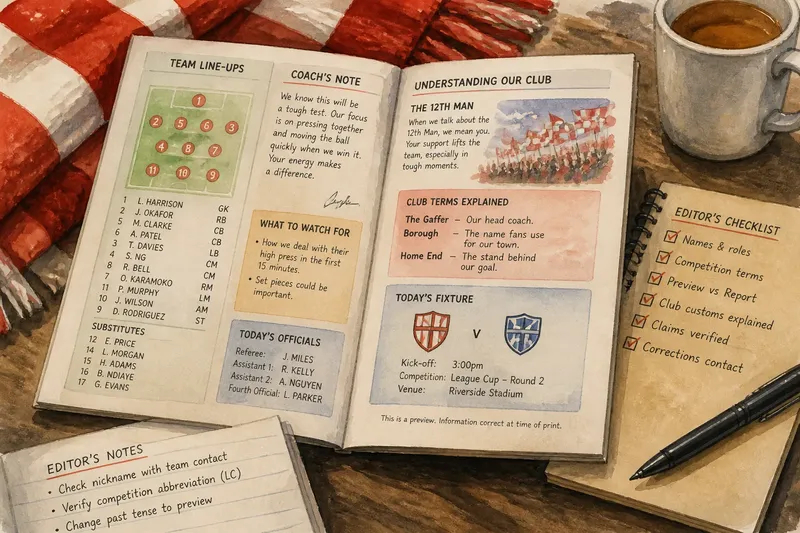
A programme arrives with a fixture already attached to it. Its date, opponent, line-up and printed features place the match within the club’s season, even if you later forget the order of events. Leaf through several and the run of home games becomes visible without needing to reconstruct it from scattered scraps.
That built-in sequence is the programme’s particular strength. It can hold more than your own recollection: names, previews, photographs and other material give the match a setting. Even a routine afternoon has a place in the record, which can make the programmes around a memorable fixture more revealing than the obvious souvenir alone.
The trade-off is that the publication records the club’s chosen frame, not necessarily yours. A printed account cannot capture the friend who travelled with you, the seat you gave up, or the odd detail that became the story you told afterwards. A programme may also feel incomplete if you missed a match or did not buy one.
What belongs in a pocket keepsake box?
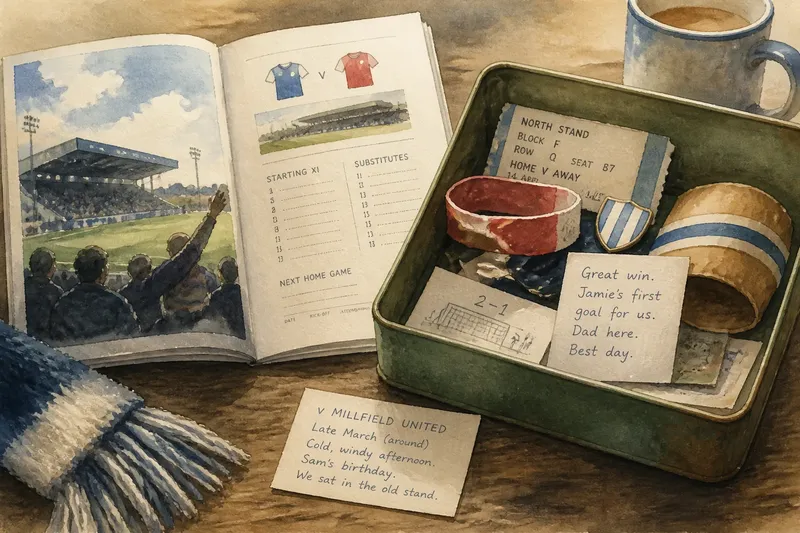
A keepsake box is a personal collection rather than a complete season archive. It might hold a folded ticket, a paper cup sleeve, a hand-drawn scoreline, a matchday badge, or a note from someone who came with you. The items need not be valuable or official; their purpose is to prompt a specific memory.
This approach welcomes irregularity. You can save something from a match that had no programme, or leave a gap where nothing felt worth keeping. A box also brings together objects that would otherwise be split among coat pockets, drawers and bags. Its story is shaped by what caught your attention, not by a publication schedule.
That freedom has a cost: loose items do not explain themselves. A ticket may become hard to place once the season has passed, especially if it carries no clear date or opponent. Add a small paper note with the match, approximate point in the season, and why you kept the object. A few words are often enough to restore its context.
Which format suits the memory you want?
Choose a programme when you value a fixture-by-fixture record, enjoy reading the material produced for a match, or want an object that already has a clear place in the season’s sequence. It suits someone who likes browsing a run of games in order, including ordinary fixtures that might otherwise blur together.
Choose a box when the season mattered through its odd details and personal connections, or when your matchgoing was too uneven for a complete run of programmes. It works well if you want to keep a handful of varied objects without turning each visit into a collecting task.
Imagine you attend several home games but buy a programme only when a friend is with you. The programmes can anchor those particular dates, while a small box holds a ticket stub and a note about the rest. You have a selective chronology alongside memories that do not depend on a complete printed set.
How can you keep a box from becoming clutter?
Give the box a clear boundary, such as one season or one club, and keep only objects that bring a match to mind. A tin, shallow storage box or sturdy envelope can work; choose something that fits the pieces without forcing them flat. If you already own programmes, keep them together on a shelf and use the box for smaller items rather than folding publications into it.
- Tickets: Keep one when its date, seat or journey matters; write missing context on a separate note.
- Paper items: Let damp or dirty pieces dry before storage, and avoid keeping anything that is still sticky.
- Loose notes: Add the opponent or match detail that will help you recognise the occasion later.
- Duplicates: Keep the copy with the clearest connection to your memory and let the others go.
- Programs and inserts: Store them flat or upright with similar items, rather than wedging them under heavier objects.
It is not worth saving every receipt, wrapper or scrap simply because it came from a matchday. If an object has no clear connection to a moment, person or place, it may add bulk without adding meaning. The point is not to curate a perfect archive, but to make opening the box feel like recognition rather than sorting work.
What should you know before choosing a format?
Can a keepsake box replace a programme?
It can preserve your own reminders, but it will not supply the fixture information and printed features of a programme. If those details matter, keep the programme for selected matches and use the box for objects the publication cannot hold.
Do you need a programme from every match?
No. A selective run can still show a season’s shape if you keep the issues tied to matches you want to revisit. A gap is simply part of your record, not a reason to abandon it.
What if you have only digital tickets?
Keep a digital copy in a folder and add a short handwritten note or another small object if you want something physical to handle. The note can record who was there and what made the day memorable.
How should paper keepsakes be stored?
Keep them in a dry, clean place away from direct sunlight, and avoid pressing delicate items beneath heavy objects. If an item has special value or unusual materials, follow its maker’s care advice or ask a conservator.
Can the two formats work together?
Yes: treat the programme as the season’s spine and the box as its margin. A programme preserves the sequence made visible by fixtures; a box gathers the personal evidence that does not fit neatly into that sequence. You might tuck a brief note beside a selected issue, while keeping the original ticket or badge in the box.
For a printed programme or pocket keepsake box, the useful question is what you want to be able to recall when you return to it. Choose the programme for an organised account of the matches, the box for a personal assortment, or a modest combination if both kinds of memory matter. Keep the system small enough that you can add an item without turning the season into a collection you feel obliged to complete.